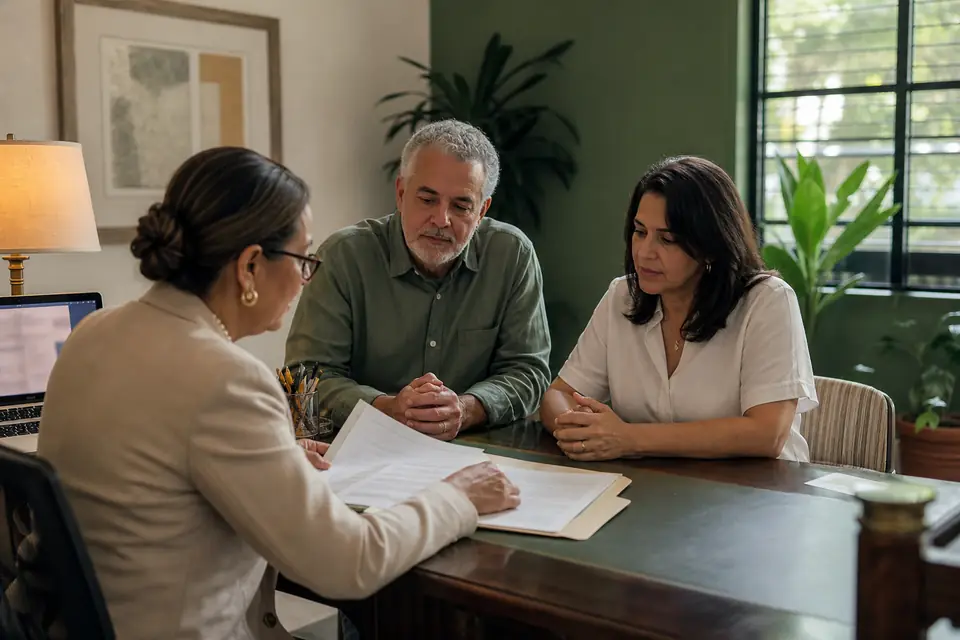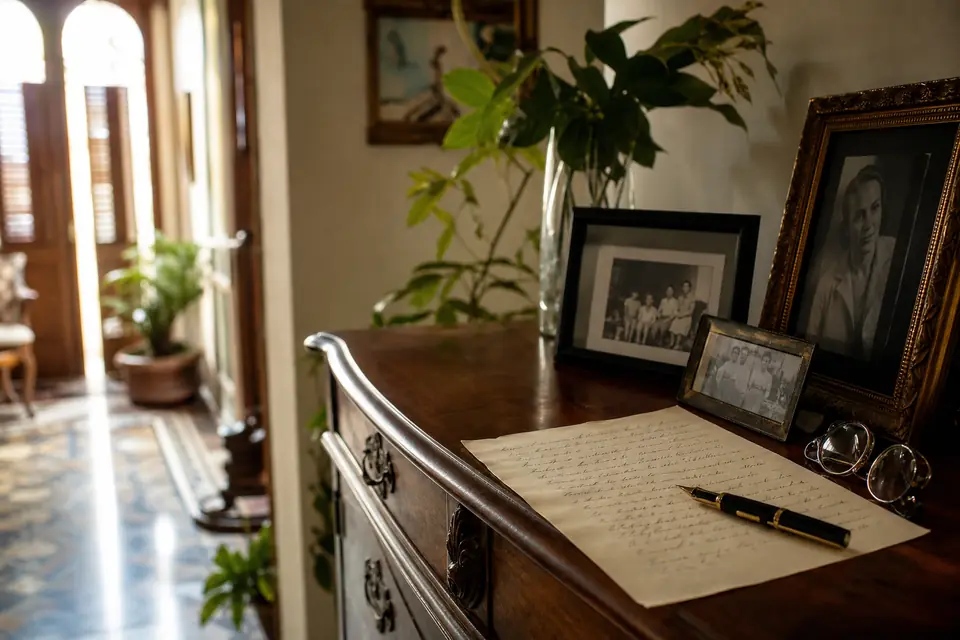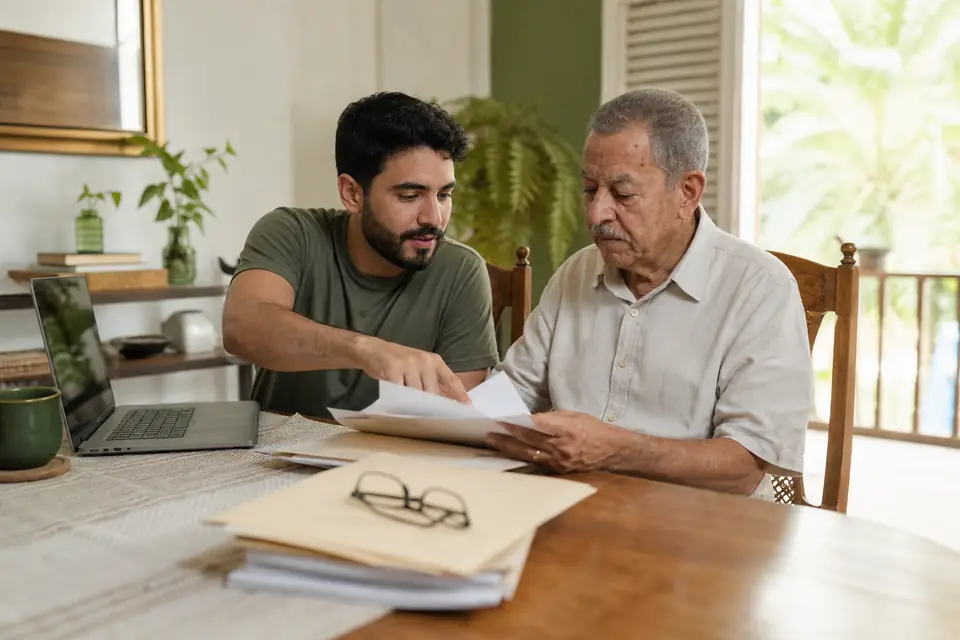
When a loved one dies, one of the first questions is whether he or she left a will. The answer changes the whole path: if there is a will, you follow what the causante (the deceased person whose estate it is) provided; if there is not, the family will normally need to obtain a declaratoria de herederos (declaration of heirs).
In Puerto Rico you do not have to guess. There is a Wills Registry (Registro de Testamentos) where notaries record every will they execute. This guide explains how to request the certificate and what to do with it.
What the Wills Registry is
The Wills Registry is part of the Oficina de Inspección de Notarías (ODIN), the Office of Notarial Inspection of the Puerto Rico Supreme Court (Ley Notarial, the Notarial Act, Art. 71). By the next business day, notaries must notify it of every will they execute, and also of every modification, revocation or expansion of a will and every formal recording (protocolización) of a handwritten will (Ley Notarial, Art. 73).
ODIN can issue two types of certificate (Ley Notarial, Art. 74):
- Positive certificate (certificación acreditativa): shows that one or more wills by that person are recorded, with the information the notary reported.
- Negative certificate (certificación negativa): shows that the Registry has no record of the person executing a will.
What the Registry does not show. It includes only the wills a Puerto Rico notary reported. A testamento ológrafo (handwritten will) kept in a drawer will not appear until it is formally recorded, and a will signed in another state or country normally will not appear either. That is why it is a good idea to also look through the causante's papers and ask the family.
Who can request the certificate
According to ODIN's form, the following can request it:
- an heir or a person with a legitimate interest;
- his or her legal representative (an attorney);
- a representative authorized by the heir; or
- the person who made the will (the testator) himself or herself.
If the testator is still living, only he or she can request the certificate. Third parties cannot do it (ODIN Memorandum No. 1, FY 2024-2025).
What you need
The request is made in writing using form OAT-1572, "Solicitud de Certificación Acreditativa o Negativa de Testamento" (Request for a Positive or Negative Will Certificate), available on the forms page of the Poder Judicial (Puerto Rico's Judicial Branch). The form is in Spanish. Include:
- The form, completed and signed. List every name the person was known by, his or her dates of birth and death, the names of his or her parents and spouse, and the municipality where he or she lived.
- A $5.00 internal revenue stamp (sello de rentas internas), code 5120. It can be a scanned physical stamp or a digital stamp bought on the Colecturía Digital platform.
- A copy of the death certificate of the causante.
- A copy of a current ID with photo and signature, issued by the Government of Puerto Rico, the federal government or a state. If you are not a U.S. citizen, a copy of your passport.
- Proof of your relationship to the causante:
- son or daughter: your birth certificate;
- grandson or granddaughter: your birth certificate and the death certificate of your father or mother who was the causante's child;
- widow or widower: the marriage certificate, unless your name appears on the death certificate.
- If you are acting on behalf of another person: a letter of authorization signed by that person and the documents that person would have to submit.
The $5 fee is set by the Ley Notarial (Art. 74) and Ley 282-1999 (Art. 13). The form warns that the amount could change if the Supreme Court changes it by resolution.
How to send it
By email. Since August 19, 2024, members of the public can send the request to certificacionestestamentos@poderjudicial.pr. ODIN asks for:
- only one request per email (an email with two or more requests is not processed);
- documents in PDF or JPEG, in black and white;
- each document no larger than 1 MB, and no more than 5 documents per request.
The certificate is sent to the same email address you wrote from. If any document or the payment is missing, the request is denied, and the stamp you sent is canceled and is not refunded. Check everything before you send it.
In person. At ODIN, on the 3rd floor of the Centro Judicial de San Juan (San Juan Judicial Center), or at the Archivo Notarial (Notarial Archive) of the Ponce District.
By mail. To Registro General de Competencias Notariales, PO Box 190860, San Juan, PR 00919-0860. If you want to receive the certificate by mail, the form asks you to include an envelope with your address and enough postage.
Active attorneys and notaries do not use email: they process the request through the SIGNO Notarial platform. The form lists the phone number (787) 763-8816 for information.
Luis lives in Orlando. His mother, Doña Carmen, died in Ponce, and he does not know whether she made a will. Luis:
- downloads and fills out form OAT-1572;
- buys a $5 digital stamp with code 5120 on Colecturía Digital;
- scans the form, his mother's death certificate, his Florida driver's license and his birth certificate, which proves he is Doña Carmen's son;
- checks that each file is under 1 MB (five documents in all, the maximum allowed) and sends them in a single email to certificacionestestamentos@poderjudicial.pr.
The certificate arrives by email. It shows that Doña Carmen executed a testamento abierto (will executed before a notary) before a notary in Ponce, with the deed number and the date.
If the certificate is negative
A negative certificate means the Registry has no record of any notarial will by that person. It is an essential document for the declaration of heirs: the court will not accept a petition for a declaration without it (Ley Notarial, Art. 75), and the notario (in Puerto Rico a notary is an attorney) also requires it in the notarial route.
Before you consider the matter closed:
- Check whether there is a handwritten will among the causante's papers. Whoever has it must present it within 30 days of learning of the death, and it expires if it is not presented within 5 years (Arts. 1653–1654 of the Código Civil de Puerto Rico de 2020, the 2020 Civil Code). See handwritten will.
- If the causante lived elsewhere, ask whether he or she made a will in another state or country.
- To find out whether someone has already obtained a declaration before a notary, there is another certificate, from the Registry of Non-Contentious Matters (Registro de Asuntos No Contenciosos), using form OAT-1656 and another $5 stamp. Anyone can request that one.
If there is a will: how to get a copy
The positive certificate tells you which notary executed the will and in which deed. The original is in that notary's protocol (protocolo, the notary's bound book of original deeds), which is confidential (Ley Notarial, Art. 47). To get a certified copy:
- Contact the notary. The successors (heirs), the people in whose favor the deed creates a right and those who show a legitimate interest are entitled to a copy. While the testator is living, no one else can get a copy of the will (Ley Notarial, Art. 43). Bring the death certificate and proof of your relationship.
- If the notary no longer practices or has died, his or her protocols usually pass to the district's Notarial Archive, which can issue certified copies (Ley Notarial, Art. 67).
- If the notary refuses, you can go to the Director of ODIN, and then to court (Ley Notarial, Art. 44).
The certified copy has a cost in fees and charges that the notary will tell you.
What to do next. The will and the ODIN certificate are documents you will need for the Planilla Informativa de Caudal Relicto (estate information return) at Hacienda, for dealings with banks and for recording properties. If the will names an albacea (executor), that person normally coordinates the next steps. See also the first steps after a death.
Frequently asked questions
How much does the will certificate cost?
A $5.00 internal revenue stamp, code 5120, according to the Ley Notarial (Art. 74) and ODIN's August 2024 memorandum. If you use an attorney, there will be separate fees.
Can I request the certificate if my father is still living?
No. While the testator is living, only he or she can request the certificate for his or her own will.
Does the certificate tell me what the will says?
No. The certificate only says whether a will is on record and the details of its execution. To know its contents you need a certified copy from the notary or the Notarial Archive.
There is more than one will on the certificate. Which one is valid?
In general, a later will revokes an earlier one if it says so or if their provisions are incompatible (Arts. 1712–1713 of the Civil Code). Ask for a copy of all of them and consult an attorney if you have doubts.
I live outside Puerto Rico. Do I have to travel?
No. You can send the request by email or by mail, with an ID issued by your state. See heirs living outside Puerto Rico.
Sources
- Oficina de Inspección de Notarías, Memorando al Notariado Núm. 1, Año Fiscal 2024-2025 (8 de agosto de 2024). poderjudicial.pr
- Oficina de Inspección de Notarías, Formulario OAT-1572, "Solicitud de Certificación Acreditativa o Negativa de Testamento" (Rev. mayo 2019). poderjudicial.pr
- Ley Notarial de Puerto Rico (Ley 75-1987), Arts. 43, 44, 47, 67 y 71–75, compilación OGP Rev. 27 de agosto de 2026. bvirtualogp.pr.gov
- Ley de Asuntos No Contenciosos ante Notario (Ley 282-1999), Art. 13. bvirtualogp.pr.gov
- Oficina de Inspección de Notarías, Formulario OAT-1656, certificación del Registro de Asuntos No Contenciosos. ramajudicial.pr
- Código Civil de Puerto Rico de 2020 (Ley 55-2020), Arts. 1653–1654. bvirtualogp.pr.gov
CaudalRelicto.com is an independent guide. It is not Puerto Rico's Departamento de Hacienda, the courts or any government agency. This page is general information, not legal advice from an attorney who knows your case. Names and figures in examples are hypothetical. Found an error? Tell us.