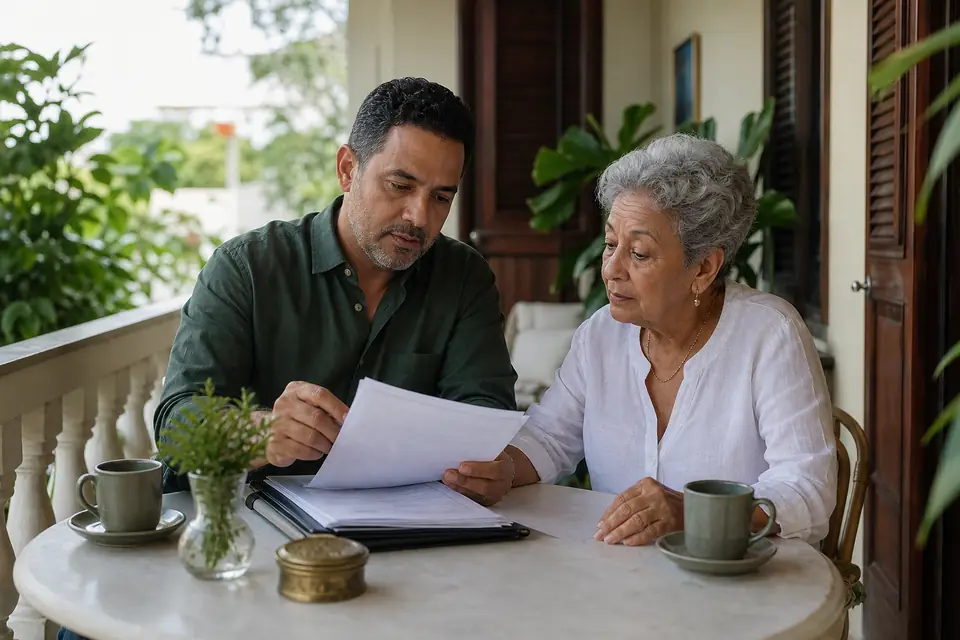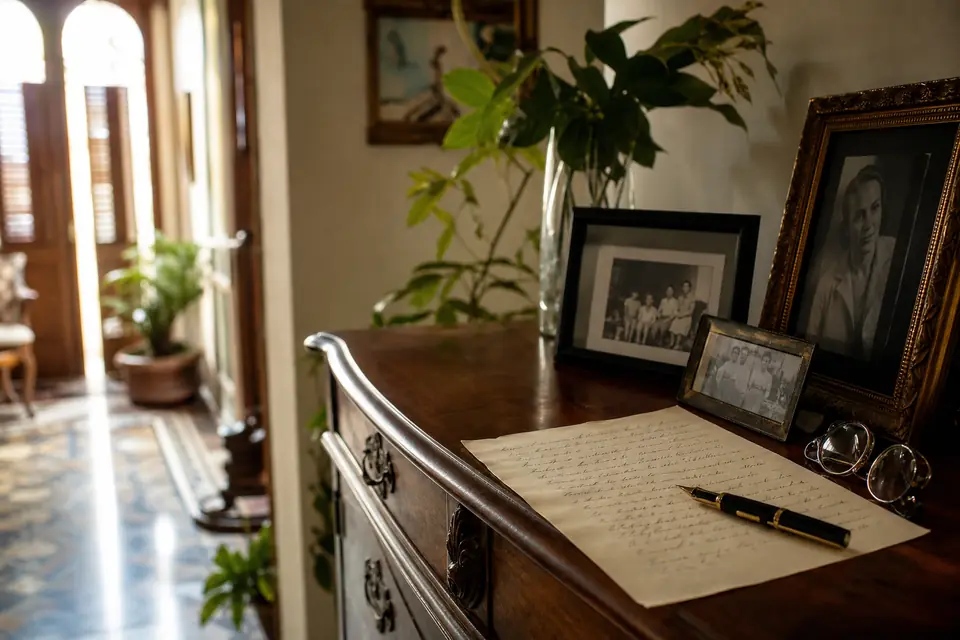
A testamento ológrafo (handwritten will) is one a person writes in their own hand, without a notary. It is legal in Puerto Rico and can fully express someone's last wishes. But it has strict rules, both for writing it and for using it after the death.
This guide covers two situations: if you are thinking about writing one, or if you found a handwritten will left by a relative who died.
Requirements for it to be valid
The Código Civil de Puerto Rico de 2020 (2020 Civil Code) defines it this way: "The handwritten will is one written in the testator's own hand, dated and signed by the testator" (Art. 1650). That means:
- In your own handwriting. The entire text must be written by hand by the testator (the person making the will). A will typed on a computer or dictated to someone else is not valid. A printed form filled out by hand risks not being considered "handwritten."
- Dated. The document must have a date. Write the full day, month and year.
- Signed. It must be signed by the testator. Anything added below the signature is treated as if it were not there, unless the testator dates and signs again (Art. 1650).
- Cross-outs and corrections initialed. Words that are crossed out, changed or written between the lines must be confirmed with the testator's signature; otherwise, they are treated as not written (Art. 1650).
- Age: 18 or older. Although you can make a testamento abierto (will executed before a notary) from age 14, a handwritten will requires age 18 (Art. 1641). Note: in Puerto Rico, the general age of majority is 21 (Art. 97), but for a handwritten will, 18 is enough.
- Capacity. As with any will, the testator must have enough understanding to know what they are doing (Art. 1641).
In addition, it can be written in any language (Art. 1652). People domiciled in Puerto Rico can make one outside the island even if the law of that place prohibits it (Art. 1651). And it must be individual: two people cannot make their wills in the same document (Art. 1640).
The content also has limits. A handwritten will cannot take away from children, descendants or a spouse their legítima (forced share), which is half of the estate when those relatives exist. If the will ignores it, the people affected can claim their share.
How it is revoked. If the testator tears up, destroys or ruins their handwritten will, it is revoked (Art. 1715). The law presumes it was destroyed by the person who had it in their possession.
After the death: present it within 30 days
The person who has a handwritten will is required to present it to the court or to a notario (in Puerto Rico, a notary is an attorney) for its validation (adveración), within 30 days after learning of the testator's death. Anyone with a legitimate interest may also present it (Art. 1653).
Do not hide it or change it, even if you do not like what it says. A person who destroys, hides or alters the causante's (the deceased person's) will can be declared unworthy to inherit (Art. 1556(f)). See disinheritance and unworthiness.
Don Ramón died on March 2, 2026, in Utuado. His daughter Teresa, who lives in New York, found out on March 9, and a week later she found a will he had written by hand in the house.
- Deadline to present it (30 days from when Teresa learned of the death): April 8, 2026.
- Deadline before it lapses (5 years from the death): March 2, 2031.
Although the lapse period is long, the prudent thing is to present it as soon as possible. These dates were calculated with a simple count of days; confirm the exact calculation with a lawyer.
You can calculate your own dates here:
Validation and recording with a notary
Validation (adveración) is the procedure to confirm that the will is authentic, that is, that the handwriting and signature belong to the deceased. Afterward, the will must be recorded in a notary's protocol (protocolización): added to a notary's official register by court order or through a notarial certificate, so it can take effect (Art. 1653). The Code leaves the details to the "applicable legislation" (Art. 1658). There are two paths.
Before the Tribunal de Primera Instancia (Court of First Instance)
The court procedure is in Art. 551A of the Código de Enjuiciamiento Civil (Code of Civil Procedure), as described by the Tribunal de Apelaciones (Court of Appeals) in case KLAN202400163 (2024):
- The will is presented and the death is proven.
- The court reads it at a hearing and confirms its identity with three witnesses who know the testator's handwriting and signature.
- The surviving spouse, descendants and ascendants are summoned; only if there are none of them, the siblings. They can appear and comment on the will's authenticity.
- If the witnesses do not convince the court, it may order a handwriting comparison or hear from a handwriting expert.
- If the court is convinced, it orders the will recorded in a notary's protocol, even if someone objects. Anyone who objects keeps the right to contest the will in a separate lawsuit.
Before a notary
Ley 282-1999 allows validation and recording to be done before a notary when there is no dispute (Art. 2). Under the rules of ODIN (Office of Notarial Inspection) for these proceedings (Rules 101–107; their numbering may have changed in the current Notarial Regulations):
- You deliver the original will, the death certificate, the deceased's birth certificate and the certificate from the Wills Registry.
- The person presenting it swears that it is the last handwritten will and gives the names of the relatives and of three people who know the deceased's handwriting and signature.
- The notary summons the interested parties and the witnesses. In certain cases, such as when there are minors or incapacitated people without representation, or unknown relatives, the notary notifies the Ministerio Público (prosecutor's office).
- The notary may use a handwriting expert. If the witnesses have doubts about the handwriting, or a dispute arises, the notary must stop acting, and the matter goes to court.
- The proceeding ends with a notarial certificate (acta de notoriedad) of validation and recording.
The notary cannot act if 5 years have already passed since the death. Once the will is recorded, the notary reports it to the Wills Registry (Ley Notarial, Art. 73).
Hacienda asks for the case number. The Planilla Informativa de Caudal Relicto (estate information return, Modelo SC 2800 C) asks, when there is a handwritten will, for the court case number and a copy of the will. See the guide to the estate information return, which is due 12 months after the death.
Lapse: the 5-year deadline
A handwritten will lapses (caduca) if it is not presented for validation within 5 years from the day of the testator's death (Art. 1654). If it lapses, it loses its effect: the estate is divided according to any earlier will, or under the rules for estates without a will, with a declaration of heirs.
Unlike a statute of limitations (prescripción), this lapse period cannot be interrupted or suspended (Art. 1209), so it is unwise to wait.
Common risks
- No date, or an incomplete date. The Code requires it to be dated (Art. 1650).
- Parts written by someone else or typed.
- Additions below the signature without a new date and signature, or corrections that were not initialed.
- It gets lost or damaged, or no one knows it exists. It does not appear in the Wills Registry until it is recorded with a notary.
- No witnesses who know the handwriting. Over the years, it can be hard to find three people who recognize it.
- Ambiguous language, such as "the house for the kids," which leads to disputes.
- Ignoring the forced share, which leads to claims by the forced heirs.
- Letting the 5 years pass.
If you can, a will executed before a notary avoids almost all of these problems. See types of wills.
Frequently asked questions
Is a handwritten will valid in Puerto Rico?
Yes, if it is written entirely by hand by the testator, dated and signed, and if the testator was 18 or older and had capacity (Arts. 1641, 1650). After the death, it must be validated and recorded with a notary to take effect (Art. 1653).
What happens if I present it after the 30 days?
The Code imposes a duty to present it within 30 days, but the will lapses 5 years after the death (Arts. 1653–1654). The Code does not say that presenting it late invalidates it by itself, but do not delay: hiding a will can lead to a declaration of unworthiness (Art. 1556).
Do I need witnesses when I write it?
No. Witnesses take part after the death, during validation, to recognize the deceased's handwriting and signature.
Can I keep it at home?
Yes, but tell someone you trust where it is. If it is lost or no one finds it, it will have no effect. Remember that if you tear it up or destroy it, it is revoked (Art. 1715).
Who pays for the validation?
We did not find a single official fee schedule we could cite for this proceeding, and the lawyer's or notary's fees are agreed with each one. Ask for a written estimate before you start, and talk with the other heirs about how that cost will be shared.
Sources
- Código Civil de Puerto Rico de 2020 (Ley 55-2020), Arts. 97, 1209, 1556, 1640–1641, 1650–1654, 1658 y 1715, compilación OGP Rev. 21 de agosto de 2026. bvirtualogp.pr.gov
- Tribunal de Apelaciones, KLAN202400163 (4 de abril de 2024), sobre el Art. 551A del Código de Enjuiciamiento Civil. dts.poderjudicial.pr
- Ley de Asuntos No Contenciosos ante Notario (Ley 282-1999), Art. 2. bvirtualogp.pr.gov
- Oficina de Inspección de Notarías, "Asuntos No Contenciosos Ante Notario" (2013), Reglas 101–107. bvirtualogp.pr.gov
- Ley Notarial de Puerto Rico (Ley 75-1987), Art. 73. bvirtualogp.pr.gov
- Departamento de Hacienda, Instrucciones del Modelo SC 2800 C (Rev. 10 may 18). hacienda.pr.gov
CaudalRelicto.com is an independent guide. It is not Puerto Rico's Departamento de Hacienda, the courts or any government agency. This page is general information, not legal advice from an attorney who knows your case. Names and figures in examples are hypothetical. Found an error? Tell us.