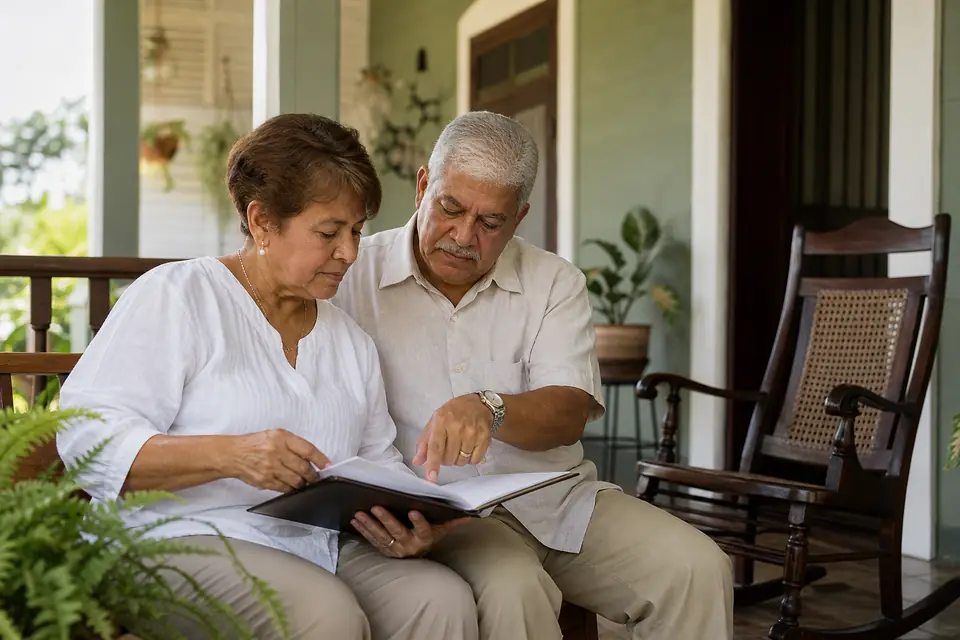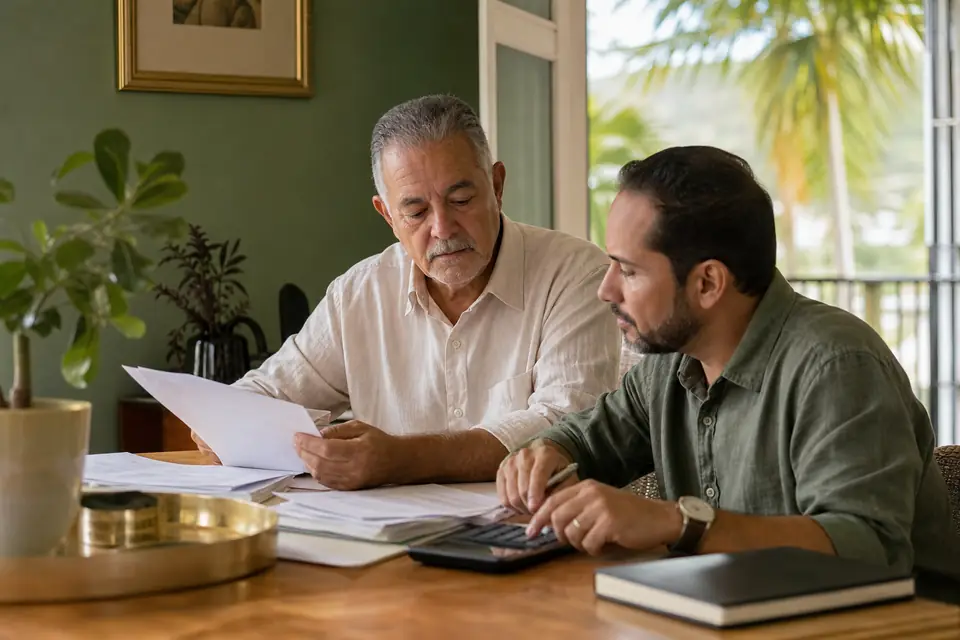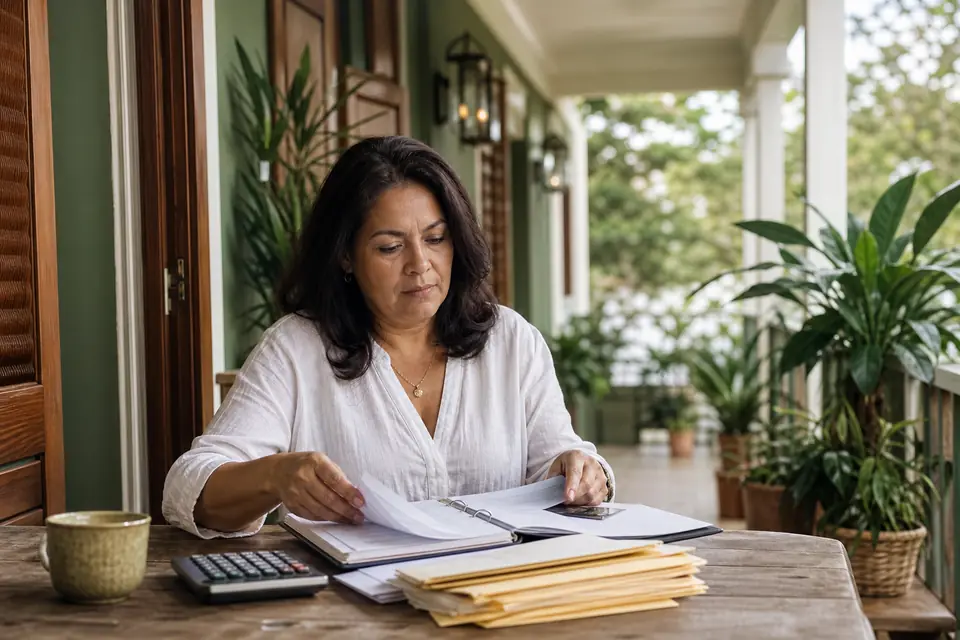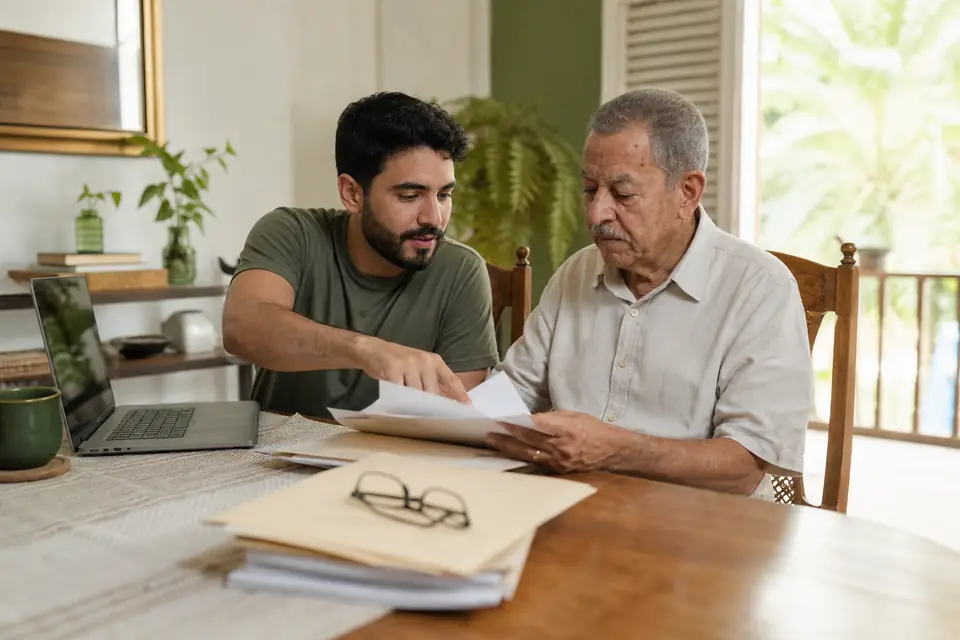
Many families are surprised to learn that, even though Puerto Rico no longer has an estate tax, a return still has to be filed with the Departamento de Hacienda ("Hacienda", Puerto Rico's Treasury). That return is the gateway to Hacienda's relevo (lien release, formally the Certificación de Cancelación de Gravamen), which in turn is needed to sell a property, divide the estate or collect all the money in the bank.
This guide is for deaths that occurred on or after January 1, 2018.
No more tax, but there is still a return
For anyone who died after December 31, 2017, there is no tax on the caudal relicto (the decedent's estate) in Puerto Rico, whether the person was a resident or not. This was established by Ley 76-2017, which amended Section 2021.01(d) of the Internal Revenue Code (Código de Rentas Internas).
What remains is an information return: Modelo SC 2800 C, "Planilla Informativa de Caudal Relicto" (Estate Information Return), with its Anejo A (Schedule A), "Detalle de Bienes del Causante" (Detail of the Decedent's Property). Its purpose is to let Hacienda know what property the causante (the deceased person whose estate it is) left and to confirm there are no tax debts before issuing the relevo. Note that Hacienda's forms and instructions are in Spanish.
The law sets no minimum amount: it says every administrator must file it (Section 2051.01(e)). More background in taxes of the estate.
If the death was before 2018, the forms are different: SC 2800 B for deaths between 2011 and 2017, and older forms for earlier dates. Filing on the wrong form is the same as not filing.
Who files it
The return is filed by the estate's administrator. According to Hacienda, this can be:
- a forced heir (legitimario);
- the surviving spouse;
- the albacea (executor) or the contador partidor (the person named to divide the estate) appointed in the will;
- an administrator appointed by the court.
The albacea is the person the testator chose to carry out the will. See the executor.
If no one has been appointed administrator, the responsibility falls on anyone who has estate property in their possession (Section 2021.02(c)). The return is signed under penalty of perjury.
When it is due: 12 months
The return is due 12 months after the date of death (Section 2051.01(e)).
Several old Hacienda pages, and even the instructions for the extension form, still say nine months. That was the deadline under the earlier system, which applies only to deaths before 2018. The Code and Determinación Administrativa 18-09 (Administrative Determination 18-09) say 12 months.
The extension: Modelo SC 2777
If you need more time, you can request an extension with Modelo SC 2777:
- it gives up to 3 additional months, or up to 6 months if the person is outside Puerto Rico;
- it must be requested before the original due date;
- it is handled in SURI;
- it asks for the estate's employer identification number, which is the federal number (EIN) the IRS issues free of charge online.
Don Rafael died on March 15, 2026. His SC 2800 C return is due March 15, 2027. If his daughter requests the extension before that date, the deadline is extended to June 15, 2027. If she lives in Florida and the extension is granted because she is outside Puerto Rico, it can be extended to September 15, 2027.
You can calculate your dates with the deadlines calculator.
How to file in SURI
Since December 10, 2018, the return, the extension, amendments, the relevo request and payment of fees are handled only in SURI (suri.hacienda.pr.gov), Hacienda's online system.
- The administrator registers in SURI using the "Registrar un nuevo contribuyente" (Register a new taxpayer) option as administrator of the estate, or adds the estate to their existing account. No account is opened in the deceased's name.
- They complete the SC 2800 C and Schedule A.
- They upload the required attachments.
- On the first page, they check the type of request (for example, the relevo) and pay the fees.
- They check the Correspondencia (Correspondence) tab, where notices and, later, the relevo appear.
If someone else will file for you, you can authorize that person as your representative in SURI.
Some Hacienda documents from 2018 still describe filing in person or by mail. Carta Circular 18-19 (Circular Letter 18-19), issued later, establishes that the process is done in SURI. If you have questions about your case, check with Hacienda.
Schedule A: the property and its tax basis
Market values are not required. That is an important difference from the earlier system. What is required, for each asset, is:
- a detailed description with its identifier: cadastral number, account number or license plate;
- how the deceased acquired it (purchase, inheritance, gift, exchange or other);
- whether it is located in Puerto Rico;
- whether it was separate or community property, and the percentage that belonged to the deceased;
- its tax basis.
The tax basis (base contributiva) is, in general terms, the cost of the asset for income tax purposes, with the adjustments the Code allows.
Assets are classified by codes: A real estate; B cash and brokerage accounts; C stocks; D mortgages and promissory notes; E cars, aircraft and boats; F contents of safe deposit boxes; G household goods; H art and jewelry; I other personal property; J other real estate.
Why the basis matters so much
For deaths since 2018, the heir inherits the same basis the deceased had (Section 1034.02(a)(5)(D)). There is no automatic increase of the basis to the value on the date of death, as there was before.
Doña Carmen, a widow, bought an apartment in Carolina for $90,000. She died in 2025 and her children inherited it. If the children sell it for $210,000, the gain for Puerto Rico income tax is calculated from their mother's $90,000 basis: $120,000, before selling expenses and other adjustments. That is why it is wise to start looking now for the purchase deed and the receipts for improvements.
If the property was community property, only the deceased's half is part of the estate. See community property and inheritance.
Required attachments
According to the SC 2800 C instructions, without all of these documents the return is not considered properly filed and the relevo process stalls:
- Proof of payment of the fees, which today are paid in SURI.
- Hacienda debt certificate covering all items, including the IVU (sales and use tax). The current form is Modelo SC 6096.
- Certificate of tax values from the CRIM (Municipal Revenue Collection Center), under the deceased's account and by cadastral number, showing no debt through the fiscal year in which the return is filed.
- Death certificate.
- The will or the declaration of heirs, as applicable. If there is a testamento abierto (will executed before a notary), you give its date and the notary; if it is a testamento ológrafo (handwritten will), the court case number. If there is no will, you give the number of the declaratoria de herederos (declaration of heirs) and attach a copy.
- Modelo SC 2655, "Acta de Apertura de Caja de Seguridad" (Safe Deposit Box Opening Record), if the deceased had a safe deposit box. That record is prepared by a Hacienda official when the box is opened at the bank.
Hacienda or the bank may ask for additional documents in some cases.
What if it is filed late?
The instructions warn that willfully failing to file on time is a misdemeanor. The Code's percentage surcharges are calculated on the tax, which on these returns is zero, and we did not find a published fixed penalty for a late return. Even so, the practical consequence is clear: no return, no relevo, and without the relevo you cannot sell, divide the estate or collect all the money.
Frequently asked questions
Do I have to file if the deceased left almost nothing?
The law sets no minimum: it says every administrator must file the return. In practice, some small funds can be collected without the relevo within the limits of Section 2054.05, which we explain in bank accounts of the deceased. If you have questions, consult a professional.
How much does it cost to file the return?
The fee for the relevo is $25, and each copy costs $5, according to the Code and Hacienda. They are paid electronically in SURI. Confirm the amount in SURI when you pay.
Do I have to get the house appraised?
Not for the information return. It asks for the description and the tax basis, not the market value. An appraisal can be useful for other purposes, such as the partition or a sale.
Is this the same as the estate's income tax return?
No. The SC 2800 C reports the deceased's property. If the estate generates income, such as rent, and its gross income exceeds $1,300 in the year, it must also file the Fiduciary Income Tax Return (Formulario 480.8, Planilla de Contribución sobre Ingresos de Fiduciarios).
Sources
- Código de Rentas Internas de Puerto Rico de 2011, Secciones 2021.01, 2051.01, 2051.03 y 1034.02. bvirtualogp.pr.gov
- Departamento de Hacienda, instrucciones del Modelo SC 2800 C (Rev. 10 may 18). hacienda.pr.gov
- Departamento de Hacienda, Carta Circular de Rentas Internas 18-19 (SURI, caudal relicto). hacienda.pr.gov
- Departamento de Hacienda, Determinación Administrativa 18-09. hacienda.pr.gov
- Departamento de Hacienda, instrucciones del Modelo SC 2777 (Rev. 30 abr 15). hacienda.pr.gov
- Departamento de Hacienda, Boletín Informativo de Rentas Internas 21-06 (Modelo SC 6096). hacienda.pr.gov
CaudalRelicto.com is an independent guide. It is not Puerto Rico's Departamento de Hacienda, the courts or any government agency. This page is general information, not legal advice from an attorney who knows your case. Names and figures in examples are hypothetical. Found an error? Tell us.