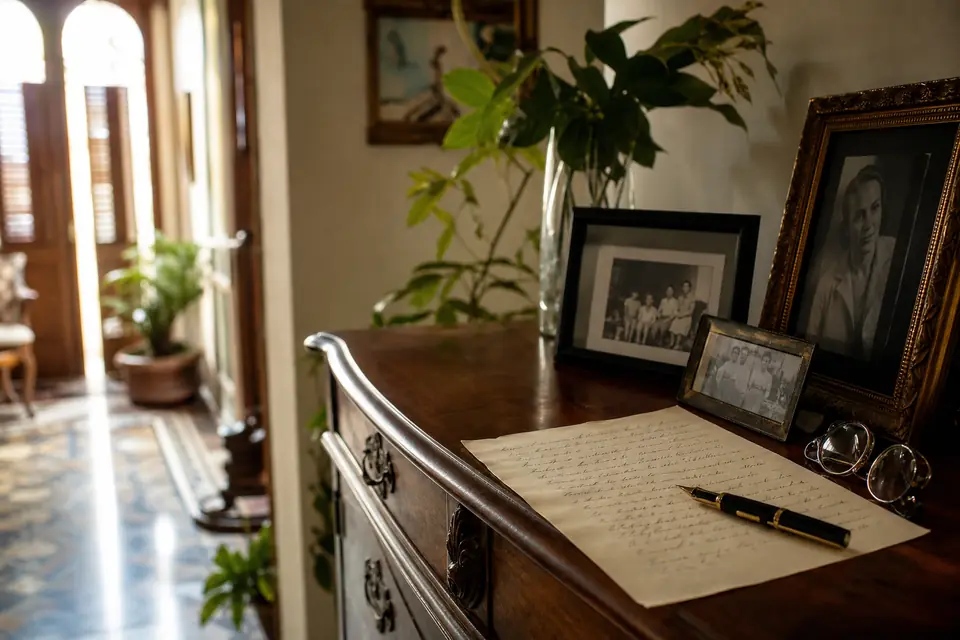
A will (testamento) is the document in which a person decides what will happen to their property when they die. The law defines it as a solemn, strictly personal, unilateral and revocable legal act (Art. 1639 of the Código Civil de Puerto Rico de 2020, the 2020 Civil Code). "Solemn" means that form matters: if the requirements for its type are not met, the will can be void (Art. 1708).
That is why it helps to know what types of wills exist in Puerto Rico and what each one requires. The person who makes the will is called the testator (testador). When they die, the law calls them the causante (the deceased person whose estate it is).
Types of wills under the 2020 Code
Art. 1643 puts it in a few words: "The open will and the holographic will are ordinary. Wills executed in danger of death and in case of epidemic are special."
| Type | Who takes part | Minimum age | Key points |
|---|---|---|---|
| Notarial (abierto) | Notary; witnesses only in special cases | 14 with sufficient judgment | Kept in the notary's protocol and reported to the Wills Registry |
| Handwritten (ológrafo) | Only the testator, written by hand | 18 | Must be presented for validation and formalized; expires 5 years after the death |
| In danger of death | Three adult witnesses | 14 with sufficient judgment | No notary; expires in 6 months if the danger passes |
| During an epidemic | Three witnesses aged 16 or older | 14 with sufficient judgment | Only during a declared epidemic; same expiration |
The age rules come from Art. 1641: anyone 14 or older with sufficient judgment can make a will, but the handwritten will requires age 18. In addition, no will can be made by two people in the same document (the so-called joint will, testamento mancomunado), unless the law of the place where it is signed allows it, and even then it has no effect on real estate in Puerto Rico (Art. 1640).
The notarial will (testamento abierto)
It is the most common. The testamento abierto (will executed before a notary) works like this: the testator expresses their wishes to a notario, who in Puerto Rico is an attorney authorized by the Tribunal Supremo (Supreme Court) to certify documents as public record. The notary drafts it as a public deed, it is read aloud and the testator signs it (Arts. 1644–1645).
Witnesses are no longer required. Under the 1930 Code, the notary and three witnesses were needed (Art. 644 of that code). The 2020 Code eliminated that requirement. Witnesses take part only if:
- the testator or the notary asks for them; or
- the testator does not know how to or cannot read or sign, in which case the formalities of notarial law are followed (Art. 1644).
There is one important exception. If the person was declared legally incapacitated for lack of judgment and wants to make a will during a lucid interval, a psychologist or psychiatrist must take part as a witness, examine the person and state in the deed that they have sufficient capacity (Art. 1649).
Other requirements: the deed must state the time it was executed (Art. 1647), although leaving it out does not void the will if the testator did not execute another one on the same date (Art. 1708). The notary must make sure the testator has capacity and state so in the deed (Art. 1648).
What happens afterward. The original stays in the notary's protocol (the notary's official, bound record of deeds), which is confidential (Ley Notarial, Art. 47). The notary reports the will to the Wills Registry of the Oficina de Inspección de Notarías (ODIN, the Office of Notarial Inspection) on the next business day (Ley Notarial, Art. 73). That way, the family can find it later with a will search certificate.
The handwritten will (testamento ológrafo)
The testamento ológrafo (handwritten will) is one the testator writes in their own hand, with a date and signature (Art. 1650). It needs no notary and no witnesses while the person is alive. It can be written in any language (Art. 1652).
Its main rules are:
- Entirely handwritten by the testator ("autograph"), dated and signed.
- Words that are crossed out, changed or written between the lines and not confirmed with the testator's signature are treated as not written. Anything added below the signature is not valid, unless the testator dates and signs again (Art. 1650).
- Only people 18 or older can make one (Art. 1641).
- Whoever has it must present it to the court or a notary within 30 days of learning of the death, and it must then be formalized (protocolizado) to take effect (Art. 1653).
- It expires if it is not presented for validation within 5 years of the death (Art. 1654).
Validation (adveración) is the process for confirming that the handwriting and signature belong to the deceased. We explain it step by step in the guide to the handwritten will.
Age for a handwritten will. In Puerto Rico, the general age of majority is still 21 (Art. 97 of the Civil Code). However, for the handwritten will the Code sets its own age: 18 (Art. 1641).
Special wills
The Code provides for two extraordinary situations (Art. 1655):
- Imminent danger of death: the testator can make a will before three adult witnesses.
- An epidemic declared by the health authorities: before three witnesses aged 16 or older.
In both cases, no notary is needed. The will is written down if possible, and the last wishes can also be recorded on video (Art. 1656). The witnesses must make sure the testator has capacity (Art. 1655).
These are emergency wills, and that is why they expire quickly: 6 months after the danger or the epidemic ends. If the testator dies within that period, the will expires if it is not presented for validation within 3 months after the death (Art. 1657).
Remember that some people cannot be witnesses to any type of will: legally incapacitated people, those who cannot read or sign, those who receive something under the will, relatives of the heir or legatee within the fourth degree by blood or the second degree by marriage, and people convicted of perjury or fraud (Art. 1642).
What happened to the sealed will?
The 1930 Code allowed the sealed will (testamento cerrado): the testator handed the notary a sealed envelope containing the will, without revealing its contents. Art. 1643 of the 2020 Code no longer includes it among the types of wills, and legal commentators confirm that it was eliminated (Gerena Casanova, 90 Rev. Jur. UPR 895, 910).
If a relative executed a sealed will before November 28, 2020, do not dismiss it. The transition rules provide that acts that were valid under the earlier law take effect according to that law (Art. 1812). How such a will is opened and formalized today is a question for an attorney. See also the 2020 Civil Code vs. the 1930 Code.
Advantages and risks of each type
Notarial will
- Advantages: the notary reviews capacity, form and whether the content respects the legítima (forced share), the part of the estate the law reserves for children, descendants and the spouse. The original is not lost, because it stays in the protocol, and it appears in the Wills Registry.
- Risks: it has a cost (the notary's fees and official charges) and requires an appointment. It can become outdated if the person does not review it after a marriage, a divorce or a birth.
Handwritten will
- Advantages: it is private, immediate and free to write.
- Risks: it can be lost, destroyed or hidden; it can have errors of form; it can ignore the forced share; and if no one presents it in time, it expires. After the death, the family has to go through a court or notarial process that is not always simple.
Special wills
- Advantages: they allow a person to leave instructions in a real emergency.
- Risks: they depend on qualified witnesses and expire within short periods.
Doña Carmen, 72, lives in Caguas and wants to leave her niece Marisol the beach house, which is part of the half of her estate she can freely dispose of. She writes a note by hand with her wishes and signs it, but forgets to date it. That paper does not meet Art. 1650, which requires the handwritten will to be dated.
If instead Doña Carmen goes to a notary and executes a notarial will, the notary will check the form, make sure her children's forced share is covered and report the will to the Wills Registry.
If you are thinking about making your will, the guide how to make a will helps you prepare your decisions before you go to the notary.
Frequently asked questions
Do I need witnesses for a notarial will in Puerto Rico?
Generally, no. Since the 2020 Code, witnesses are not needed, unless you or the notary ask for them or you do not know how to or cannot read or sign (Art. 1644). If the person was declared incapacitated and executes the will during a lucid interval, a psychologist or psychiatrist must take part (Art. 1649).
Is a will typed on a computer and signed by hand valid?
Not as a handwritten will. A handwritten will has to be autograph, meaning written by hand by the testator, as well as dated and signed (Art. 1650). Outside the special cases of danger of death or an epidemic, a printed document that was not executed before a notary does not fit any of the types in the Code, and such a will is void (Art. 1708).
Can a married couple make a single will together?
Not in the same document. A joint will is prohibited, unless the law of the place where it is signed allows it, and even then it has no effect on real estate in Puerto Rico (Art. 1640). Each spouse must execute their own.
My father made a notarial will with three witnesses before 2020. Is it still valid?
A will validly executed under the earlier law takes effect according to that law (Art. 1812). But if the death occurred on or after November 28, 2020, the estate is divided under the new Code, respecting the will's provisions to the extent the Code allows (Art. 1816). For example, the mejora (the extra share a parent could leave to certain descendants under the 1930 Code) no longer exists. It is a good idea to have an attorney review it.
Which will is best?
It depends on each person, but the notarial will offers more security because a notary reviews the form, capacity and content, and the original is kept safe in the notary's protocol. The handwritten will is useful as a quick solution, but it carries more risks of errors in form, loss and expiration.
Sources
- Código Civil de Puerto Rico de 2020 (Ley 55-2020), Arts. 1639–1658 y 1708, compilación OGP Rev. 21 de agosto de 2026. bvirtualogp.pr.gov
- Ley Notarial de Puerto Rico (Ley 75-1987), Arts. 47 y 73, compilación OGP Rev. 27 de agosto de 2026. bvirtualogp.pr.gov
- Gerena Casanova, "El Código Civil de PR de 2020 - cambios en la sucesión testada", 90 Rev. Jur. UPR 895 (2021). derecho.uprrp.edu
- Código Civil de Puerto Rico de 1930, Art. 644 (testamento abierto con tres testigos). bvirtualogp.pr.gov
CaudalRelicto.com is an independent guide. It is not Puerto Rico's Departamento de Hacienda, the courts or any government agency. This page is general information, not legal advice from an attorney who knows your case. Names and figures in examples are hypothetical. Found an error? Tell us.